Too Much Backstage, Not Enough Stage: When Vulnerability Becomes a Career Ceiling
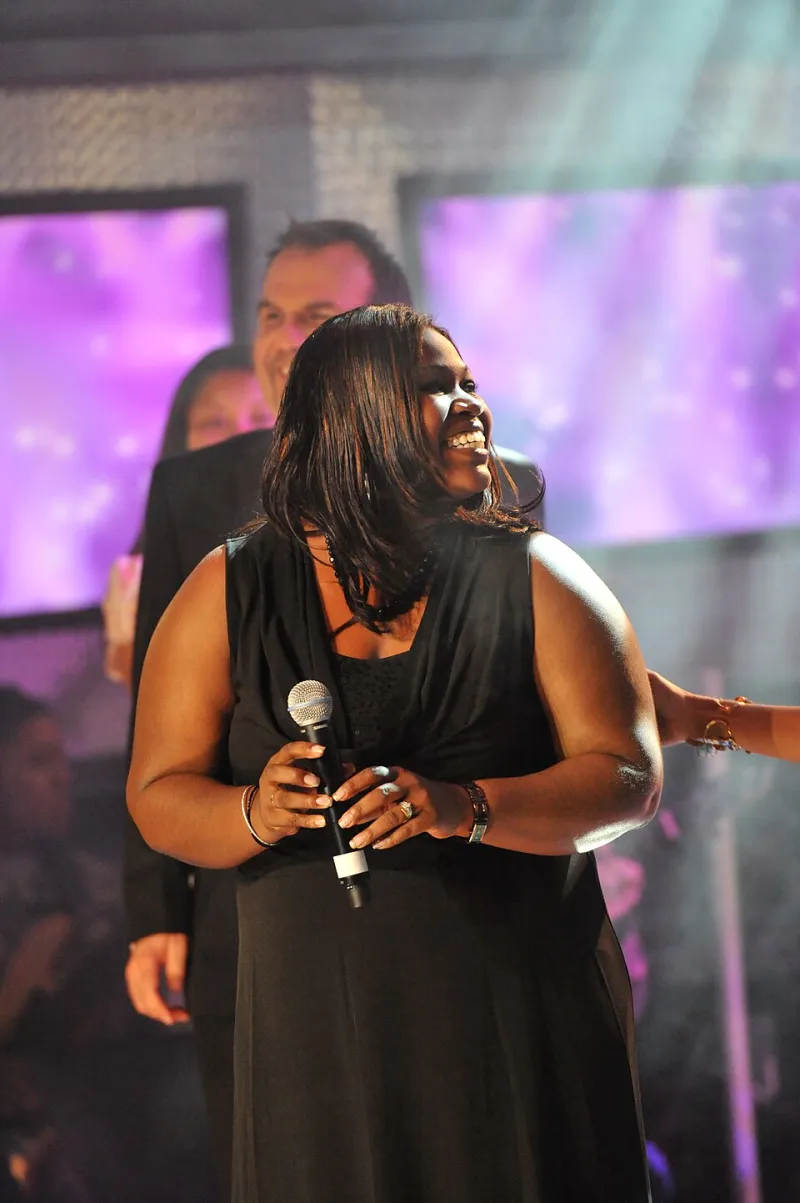
Photo: U.S. Army, CC BY 2.0, via Wikimedia Commons
There's a moment in every entertainer's career where someone — a coach, a podcast host, a well-meaning mentor — tells you that vulnerability is your superpower. And honestly? They're not wrong. Audiences connect with real people. The messy, unfiltered stuff builds trust in ways that a polished press release never could.
But here's what nobody follows up with: there's a version of vulnerability that works for your career, and there's a version that quietly works against it. And the line between the two is thinner than most people realize.
I've watched talented people — genuinely gifted entertainers — share so much of their struggle that casting directors, producers, and collaborators started seeing them as the struggle itself. Not as the artist. Not as the performer. Just as the person who's always going through something.
That's not a brand. That's a limitation.
The Audience Loves It. The Industry Doesn't Always.
Here's the tension nobody talks about openly: your audience and the industry gatekeepers are not the same audience.
Your followers on Instagram might genuinely love the 3 a.m. voice memo where you talk about your anxiety before a big audition. That content gets saves, DMs, comments that say this is exactly what I needed. It feels like connection — because it is connection.
But the casting director who just watched that video before pulling up your reel? They might be filing you under a very specific mental category. One that doesn't include the lead role you've been working toward for three years.
This isn't cynical. It's just how the industry processes information. When you repeatedly show one version of yourself — even a relatable, sympathetic version — you start to own that version in the minds of the people making decisions. And in entertainment, being typecast isn't just about the roles you play on screen. It starts way before the camera turns on.
Performative Vulnerability vs. Strategic Openness
Let me be clear about something: I'm not suggesting you fake it. I'm not saying build a highlight reel and pretend everything is fine. That ship has sailed, and audiences have excellent radar for inauthenticity.
What I am saying is that there's a difference between sharing a struggle after you've moved through it and documenting the struggle in real time as your primary content strategy.
One of those positions you as someone who overcomes. The other positions you as someone who is perpetually in the middle of something hard.
Think about the entertainers you admire most — the ones with real longevity in their careers. They share personal stories, yes. But they tend to share them from a place of reflection, not raw exposure. They've processed the moment enough to offer some kind of perspective. There's a craft to it. It's not accidental.
That's strategic openness. You're letting people in, but you're choosing which door you open and when.
The Mystique Problem
There's also something to be said for what people don't know about you.
In an era where everyone is encouraged to document everything, the entertainers who maintain a little mystery stand out. Not because they're hiding something, but because they understand that the imagination is a powerful thing. When an audience doesn't have the full picture, they fill in the gaps — and often, what they imagine is more compelling than whatever the reality might be.
This isn't about being fake or inaccessible. It's about recognizing that some of your story is yours. You don't owe anyone a live broadcast of your worst moments. Keeping certain things private doesn't make you inauthentic — it makes you human. And it leaves room for people to project possibility onto you, which matters enormously when someone is deciding whether to cast you as a romantic lead, a villain, a comedic foil, or something entirely new.
Constant oversharing collapses that space. It leaves no room for imagination.
What to Share, What to Protect
So how do you figure out where the line is? A few things I've found useful:
Ask yourself who the sharing is for. If the answer is genuinely your audience — if the story serves them in some way, teaches something, or creates real connection — that's worth considering. If the honest answer is that you just need to get it out and your platform is the closest outlet, that's a journal entry, not a post.
Wait until you have some distance. The most powerful personal stories in entertainment are usually told in past tense. Not because the pain wasn't real, but because distance gives you the ability to shape the narrative. Raw, unprocessed content can feel honest in the moment but ends up being more about your emotional state than about anything the audience can actually use.
Think about the casting implications. Before you post something deeply personal, ask yourself: does this expand the range of roles or opportunities people might imagine me in, or does it narrow it? That's not a reason to never share hard things — but it's a useful filter.
Protect your next chapter. Whatever you're working toward, make sure your content leaves room for it. If you're trying to transition from comedy to drama, flooding your feed with content about your struggles might actually reinforce the very identity you're trying to evolve beyond.
Vulnerability as a Tool, Not a Default
The entertainers who do this well — the ones who've built careers with real range and staying power — treat vulnerability like any other tool in the kit. They use it with intention. They know when it serves the work and when it's just noise.
That's not a betrayal of authenticity. That's craft.
You can be a real, full, complex human being and still be thoughtful about what you share publicly. In fact, that thoughtfulness is itself a form of professionalism that the industry notices, even if it never says so out loud.
So yeah — keep being real. Keep letting people in. Just make sure you're the one holding the door.