From Fifteen Minutes to Long-Term Money: How I Made One Viral Moment Actually Stick
Photo: Photograph by Mike Peel (www.mikepeel.net)., CC BY-SA 4.0, via Wikimedia Commons
I still remember refreshing my phone at two in the morning, watching the notification count climb in a way that didn't feel real. Something I'd made — something I'd honestly not thought much about when I posted it — was taking off. Not just a little. A lot.
By morning, I had more eyes on my work than I'd accumulated in the previous two years combined.
And my first instinct? Pure panic.
Because here's the thing nobody prepares you for: viral attention is overwhelming, fleeting, and completely indifferent to whether you're ready for it. It doesn't care if your website is half-finished, your merch store isn't set up, or you haven't slept in 36 hours. It just shows up, burns bright, and starts fading almost immediately.
What you do in that window determines whether the moment becomes a memory or a foundation.
What Actually Happened
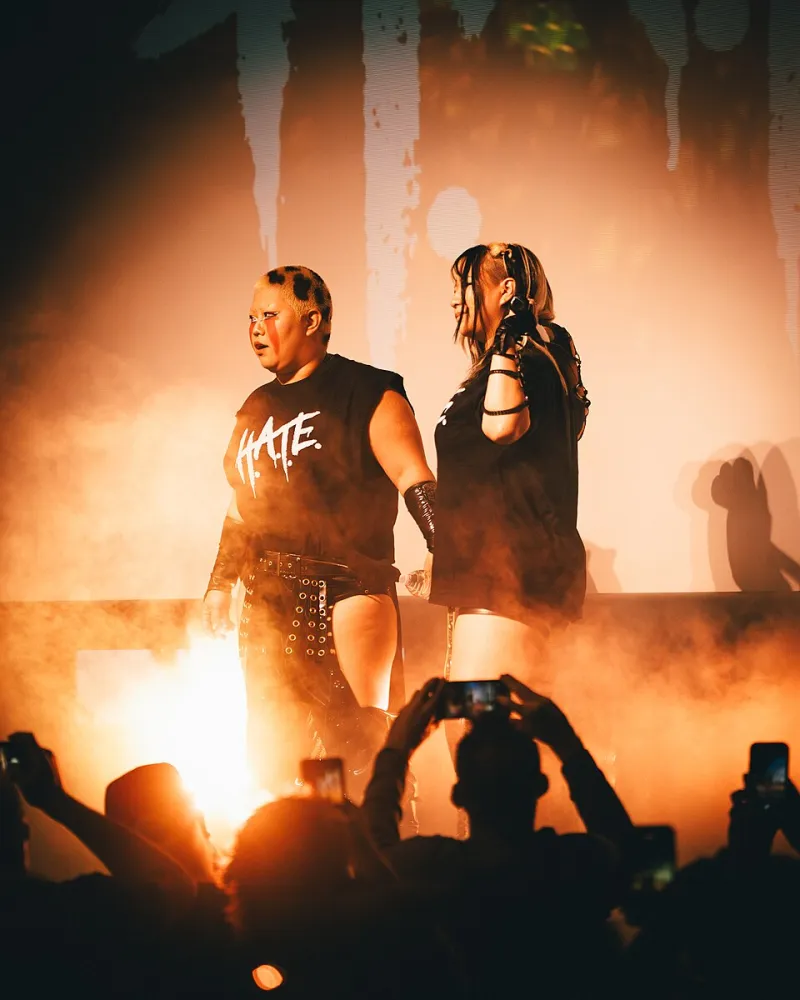
I'm going to be specific here because vague success stories are useless. The moment that blew up was a performance clip — a piece of storytelling content I'd shared somewhat casually on social. It hit a nerve. Within 72 hours, it had cleared several hundred thousand views across platforms, I'd picked up thousands of new followers, and my inbox had gone from manageable to genuinely unmanageable.
At the 48-hour mark, I made a decision: I was not going to let this be a footnote. I was going to treat it like a business event.
That shift in mindset — from "this is exciting" to "this is an opportunity with a short shelf life" — changed everything about how I responded.
The First 72 Hours: Triage Mode
Step one was capturing the audience before they moved on. I put out follow-up content within 24 hours — not a rehash of the viral piece, but something that gave new followers a reason to stick around. A behind-the-scenes look at how that moment came together. A short piece that showed a different dimension of what I do.
The goal wasn't to chase the viral moment. It was to convert the spike into a stable baseline.
I also updated my link-in-bio to push toward an email list signup. This is the move I'm most glad I made. Social platforms come and go, algorithms shift, but an email list is yours. I picked up roughly 2,300 new subscribers in the first week. That list has been worth more to me long-term than any single platform metric.
Building Revenue Channels From the Attention
Here's where it gets practical. Once I had some of that audience captured, I started thinking about how to convert attention into actual income — not in a desperate or salesy way, but strategically.
Sponsorships and Brand Deals. The inbound messages from brands started within a few days of the viral moment. Most of them were a hard no — wrong fit, weird terms, or frankly just low-ball offers banking on my inexperience. But a couple were genuinely interesting. I negotiated two brand partnerships in the month following the viral moment, which brought in a combined $4,800. Not life-changing, but real money, and it established a rate baseline I've built on since.
A Digital Product. This one surprised me. I had a skills-based workshop I'd been sitting on for months, half-finished and full of excuses. The viral moment forced my hand. I finished it in a week and launched it to my new email list. First month revenue from that product: $1,200. It's since made considerably more through ongoing promotion, but that initial launch happened directly because of the attention spike.
Consulting and Booking. A portion of the new audience wasn't just fans — they were industry-adjacent people: event organizers, content creators, media folks. I started getting inquiries about speaking, consulting, and private bookings at a rate I hadn't seen before. I set up a simple inquiry form and started fielding those seriously. That channel alone has generated five figures over the past year.
What I Got Wrong
I want to be honest about the mistakes too, because the wins are only half the story.
I underpriced the digital product at launch. Significantly. I was so anxious to convert the moment into something tangible that I set the price too low and left real money on the table. I've since adjusted, but I can't go back and recapture that initial wave at the right price point.
I also didn't sleep enough and made a couple of partnership decisions too quickly. One brand deal I rushed into had terms I hadn't read carefully enough, and it created some awkward obligations down the line. Urgency is the enemy of good contracts.
And I spent too much energy trying to recreate the viral moment instead of building steadily. You cannot manufacture lightning twice. What you can do is build something durable while the lightning is still visible.
The Long Game
A year out from that moment, here's where things actually stand. My email list is at just over 6,000 subscribers. The digital product has done roughly $18,000 in total revenue. The brand partnership work has become a consistent line item in my income, and the consulting bookings have opened doors to rooms I wouldn't have been in otherwise.
None of that is the viral moment itself. All of it is what I built because of it.
The real lesson isn't about going viral — most people don't, and that's genuinely fine. The lesson is about infrastructure. If you're building an entertainment career without a way to capture audience attention, without a product or service to offer, and without a direct line to your people, you're leaving yourself completely at the mercy of algorithms and luck.
Build the infrastructure before the moment comes. And if the moment comes before you're ready — like it did for me — build it as fast as you possibly can.
Fifteen minutes of fame is a cliché because it's usually true. But fifteen minutes is also enough time to pour a foundation, if you know what you're doing.