When Polishing Your Brand Actually Dulls Your Edge
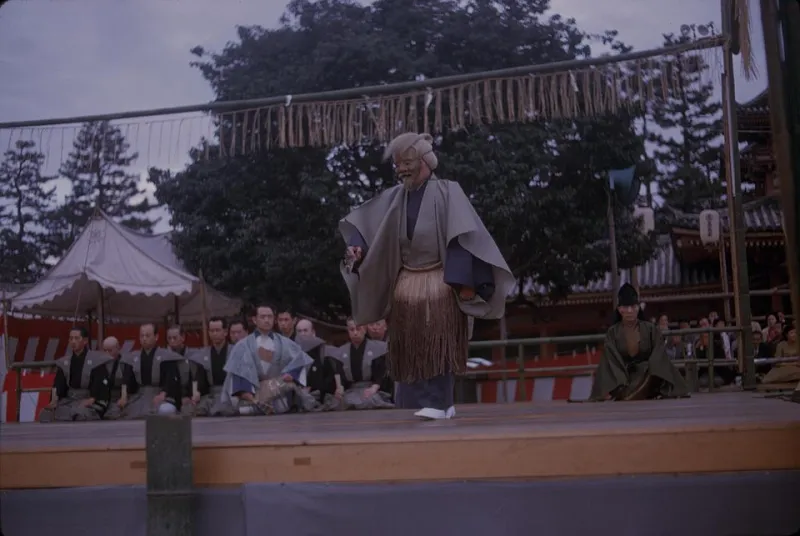
Photo: Carlquist, Sherwin John, 1930-2021, CC BY 4.0, via Wikimedia Commons
The Moment I Realized My Brand Was a Costume
I had a headshot, a bio, a reel, and a social media grid that looked like someone had color-coded my entire personality. Everything matched. Everything was consistent. Everything was, frankly, a little dead.
A casting director I'd been trying to get in front of for two years finally watched my reel. Her feedback? "You look like you're trying to be someone we'd hire instead of just being someone we'd hire." I didn't know whether to thank her or cry in my car. I did both.
That note cracked something open for me. Because she was right. Somewhere between building a "personal brand" and actually showing up as myself, I had sanded down every rough corner, every weird quirk, every contradiction that made me genuinely interesting. I'd become a very convincing approximation of a working entertainer rather than an actual one.
The Industry Talks About Authenticity — But What Does It Actually Mean?
Here's the thing about the word "authentic" in entertainment circles: it gets thrown around so much it's basically lost its meaning. Everyone says they want authentic. Then they hand you a brand guide.
But when you actually talk to the people making hiring decisions — the casting directors, the producers, the talent managers who've been in rooms with thousands of performers — what they describe wanting sounds a lot less like a curated brand and a lot more like a person who hasn't fully figured themselves out yet.
"The best talent I've worked with always had something a little unresolved about them," one New York-based casting director told me. "Not a mess, but not finished either. There's texture there. You can feel that they're still becoming something. That's what reads on camera and on stage."
That's a hard sell when every piece of career advice you've ever gotten tells you to project confidence, clarity, and consistency. We're told to know our lane. Know our type. Know our brand. And there's real value in self-awareness — don't get me wrong. But there's a difference between knowing who you are and packaging yourself so tightly that nobody can actually get to who you are.
What the Highlight Reel Hides
Scroll through any working entertainer's Instagram and you'll see the wins. The premiere photos, the press mentions, the perfectly lit behind-the-scenes content. What you won't see is the audition they bombed six weeks before landing the role. The creative partnership that fell apart. The year they spent questioning whether they were even cut out for this.
Here's the irony: those are often the exact experiences that made them compelling enough to book the job.
A producer friend of mine — someone who works primarily in unscripted television in Los Angeles — said something that stuck with me. "When I'm looking for hosts or on-camera talent, I actually go digging for the old stuff. The awkward interviews, the early YouTube videos, the stuff they'd probably rather I didn't find. Because that tells me who they actually are before they learned to perform being themselves."
That's a wild thing to sit with. The version of you that exists before the polish might be more valuable than the version you've been so carefully constructing.
Strategic Positioning vs. Strategic Self-Erasure
Let me be clear: I'm not saying throw your brand out the window. Knowing how to position yourself in a crowded market is a real skill. Understanding how you're perceived and being intentional about that perception — that's not fake, that's professional.
But there's a line between strategic positioning and strategic self-erasure, and a lot of us have crossed it without noticing.
Strategic positioning sounds like: "I lead with my storytelling background because it's what makes my performance work distinctive."
Strategic self-erasure sounds like: "I took the part of my background that felt too niche or too weird and just... didn't mention it. Ever."
The first is editing. The second is amputation.
And audiences feel the difference, even when they can't name it. There's a reason certain performers create genuine fandoms while others — with comparable credits and arguably better reels — never quite break through. The ones who connect aren't necessarily more talented. They're more legible as actual human beings. Their contradictions are visible. You can sense that they've lived something.
Do Your Own Authenticity Audit
So what does this actually look like in practice? Here's a loose framework I've been working through myself — call it an authenticity audit.
Look at what you've removed. Go back through your bio, your reel, your social content, and ask: what did I cut because it felt too weird, too niche, or too hard to explain? Sometimes those are exactly the things worth putting back.
Notice where you over-explain. If there's a part of your background or creative work that you always feel compelled to justify or contextualize, that tension is worth examining. You might be apologizing for the most interesting thing about you.
Ask someone who knew you before the brand. A friend from before you went professional, a family member, a collaborator from early in your career. Ask them what they'd say if someone asked them to describe you. The gap between their answer and your official bio is informative.
Watch yourself in unguarded moments. Old videos, candid recordings, anything where you weren't performing. What's there that your current brand doesn't capture?
The Uncomfortable Truth About Casting Rooms
I talked to a talent manager who's been in this business for over fifteen years, and she said something I keep coming back to: "We can tell within thirty seconds if someone is performing confidence versus actually being comfortable in their own skin. And the second one is so much rarer. When we see it, we don't let it go."
Comfort in your own skin isn't the same as having everything figured out. It's not about projecting ease or certainty. It's about not running from the parts of yourself that are complicated or contradictory or still in progress.
The most memorable performers I've watched — the ones who make you feel something from across a room — they carry their whole story with them. You can feel the weight of it. The stuff that didn't work out. The pivots. The years of uncertainty. It's not something they perform. It's something they've stopped trying to hide.
What I'm Still Learning
I'll be honest: I'm not fully there yet. There are still parts of my story I smooth over in professional settings. Still instincts to package myself neatly before walking into a room. Old habits don't die fast in this industry.
But I'm getting better at catching myself mid-erasure. At asking whether I'm editing for clarity or editing out of fear. At recognizing the difference between a well-placed highlight and a carefully constructed fiction.
The brand isn't the enemy. The fear underneath the brand — that's the thing worth examining. Because audiences don't fall in love with brands. They fall in love with people. And people, by definition, are a little inconsistent, a little unfinished, and a lot more interesting than any highlight reel could ever capture.