Stop Filing Down Your Edges: The Version of You That Audiences Actually Remember
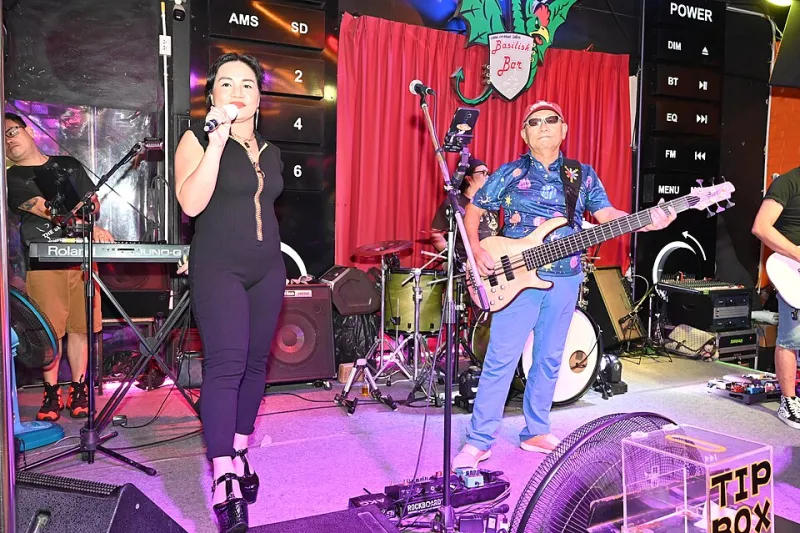
Photo: PattayaPatrol, CC BY-SA 4.0, via Wikimedia Commons
I used to have a note I kept somewhere in the back of every creative decision I made. It wasn't written down anywhere. It lived in the part of my brain that monitors for social danger, the part that learned early that standing out too far in the wrong direction gets you cut down. The note said, more or less: Don't be too much.
For a long time, I thought that note was wisdom. Turns out it was just fear wearing a blazer.
The Performance of Being Relatable
Here's something I've noticed about American entertainment culture specifically: we have a complicated relationship with authenticity. We say we want the real thing. We celebrate vulnerability, we follow creators who "keep it honest," we're suspicious of anything that feels too polished or PR-managed. And yet — watch what happens when someone actually shows up with their full, unfiltered weirdness. The algorithm punishes them. The comments get uncomfortable. The brand deals don't come.
So creators learn to perform authenticity rather than practice it. They share the kind of vulnerability that's been pre-approved by the culture — the struggle that already has a redemption arc attached, the quirk that reads as charming rather than alienating, the strong opinion that lands within the acceptable range of strong opinions.
I did this for years. I got pretty good at it. And my work was competent and forgettable and I could not figure out why.
What I Was Actually Hiding
The stuff I kept dialing back wasn't random. It was specific. It was the parts of how I see the world that I'd spent the most time defending in real life — the takes that cleared rooms at parties, the creative instincts that other people called "interesting" in the tone that means "I don't get it," the references that were too niche, the emotional register that was too intense for casual settings.
I thought those things were the problem. I thought if I could just sand them down enough, I'd become the version of myself that could succeed at scale.
What I didn't understand yet is that those were the only parts of me that were actually irreplaceable.
The Paradox at the Center of Personal Branding
Here's the thing about trying to appeal to everyone: you end up appealing most strongly to no one. This is not a new insight — marketers have been saying it for decades — but it lands differently when you're the product.
When you strip out the specific, the strange, the genuinely polarizing elements of your creative identity, what's left is a version of you that's easy to understand and easy to scroll past. There's no friction. No texture. Nothing that catches on the mind of someone moving at full-speed through their feed.
Distinctive creators — the ones who build real, lasting audiences rather than just accumulating passive followers — tend to have at least one quality that a meaningful percentage of people actively dislike. That's not a bug. It's the proof that they're actually something, rather than a smooth, agreeable, forgettable nothing.
Think about the entertainers and creators who have genuinely cult-level followings in the US. Almost none of them got there by being palatable. They got there by being so specifically themselves that the people who connected with that specificity had nowhere else to go.
The Moment I Stopped Editing Myself
I remember the first piece of work I released where I genuinely didn't soften anything. Didn't run it through the internal filter. Didn't ask myself whether the widest possible audience would get it. Just made the thing the way I actually wanted to make it, with all the weird angles intact.
I was convinced it would land badly. It felt too specific. Too me.
The response was unlike anything I'd gotten from the carefully calibrated stuff. Not bigger in terms of raw numbers — but deeper. People didn't just consume it and move on. They came back to it. They sent it to specific people in their lives because it said something they'd never heard said quite that way. They commented not with the generic positive feedback that means "this was fine" but with the kind of response that means "this reached me somewhere real."
That's the difference between reach and resonance. And I'd been so focused on the first thing that I'd been actively sabotaging the second.
How to Figure Out What You've Been Suppressing
If you're not sure what your suppressed edges actually are, here are a few places to look:
What do you make when you're not thinking about the audience? The stuff you create just for yourself, or for a single person you trust — that's usually closer to your real voice than anything you've packaged for public consumption.
What do people who know you well say about your work versus what strangers say? If the people who actually know you say your public work feels flatter or less interesting than your private personality, you're leaving your best material on the cutting room floor.
What's the thing you always want to say but pull back from? Not the thing that's genuinely harmful or thoughtless — but the honest, specific, risky take that you soften into something more digestible. That's usually where your actual perspective lives.
The Audience You Actually Want
Here's the reframe that changed how I think about this: a smaller audience that genuinely needs what you specifically make is more valuable — creatively, professionally, and economically — than a larger audience that thinks you're kind of fine.
The people who connect with your specific weirdness aren't just fans. They're your people. They'll show up for the next thing. They'll tell other people who are also your people. They become the foundation of something durable, rather than a spike in your analytics that disappears by Thursday.
You don't have to be weird for the sake of it. You don't have to manufacture edges you don't have. But the ones you were born with — the ones you've been carefully managing and minimizing — those deserve a seat at the table.
Stop filing them down. That's the whole job.